Lucia Takáčová je výrazná osobnosť súčasnej slovenskej výtvarnej scény, ktorá svojou tvorbou prináša unikátny dialóg medzi výtvarným umením a hudbou. Jej diela oscilujú medzi poetickým realizmom (realismus poeticus) a expresívnou imagináciou (imaginatio expressiva). Jej tvorba sa vyznačuje silným prepojením medzi hudobnou a výtvarnou kultúrou, čím dokáže divákom sprostredkovať jedinečný synestetický zážitok. Hudobné motívy, ktoré sú v jej tvorbe dominantné, predstavujú kompozície, kde sa prelínajú rôzne druhy umenia – obraz, zvuk a pohyb. Diela, ktoré prezentuje na výstavách, ako napríklad „Via Gaudium“, sú oslavou života a radosti a zároveň harmonickým dialógom medzi prírodou a hudbou.
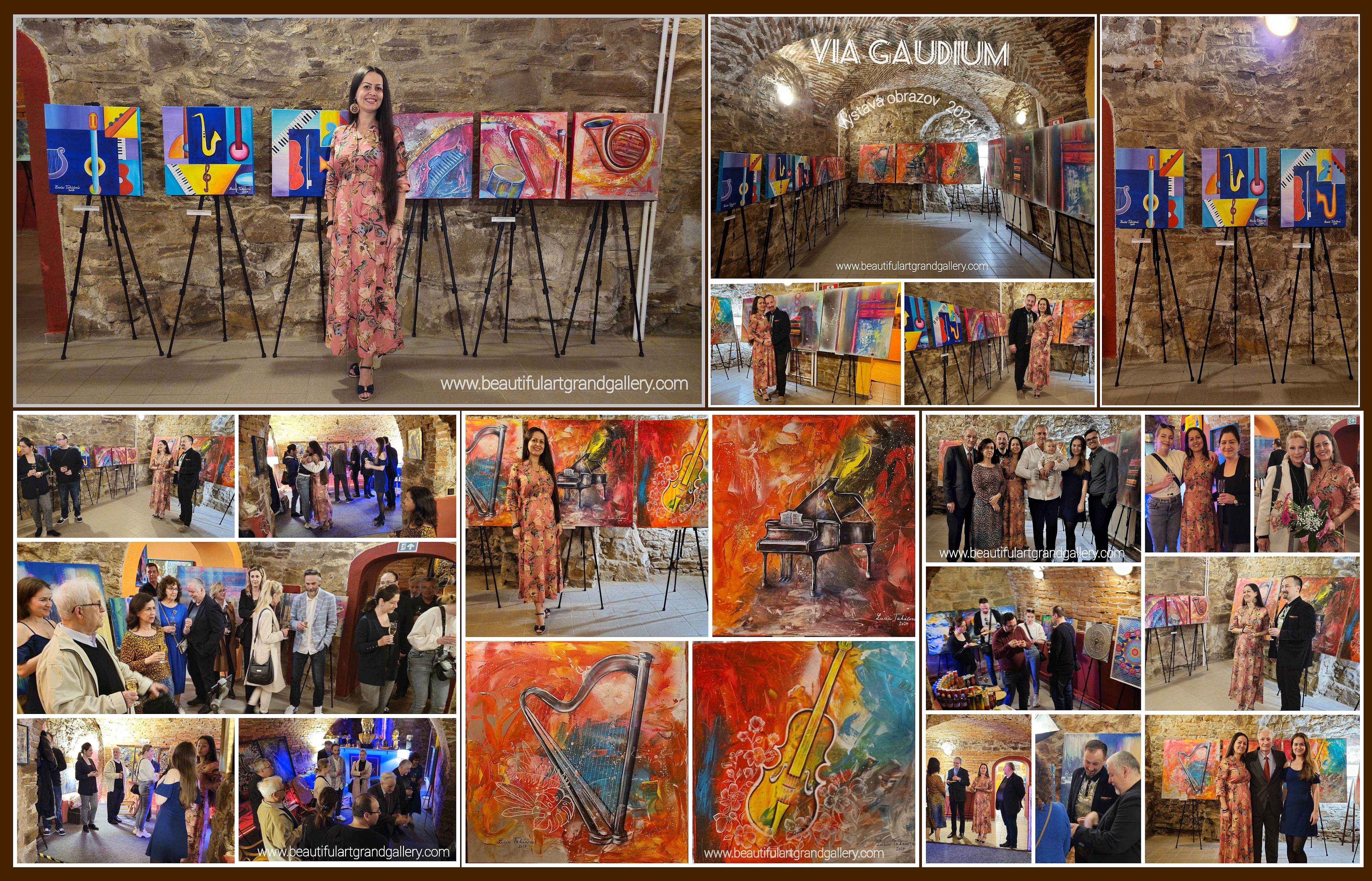
Tvorba Lucie Takáčovej sa vyznačuje prepojením hudby a vizuálneho umenia, ktoré spolu vytvárajú jedinečný symbiotický celok. Hudobné motívy v jej dielach nesú hlbokú symboliku a predstavujú viac než len vizuálny prvok; sú akousi vizuálnou partitúrou, ktorá vyjadruje jej vnútorný svet a citové rozpoloženie. Lucia Takáčová využíva hudobné nástroje ako metafory, pričom im pripisuje osobitný význam v závislosti od kontextu diela.

V dielach Lucie Takáčovej majú husle špeciálny význam, ktorý siaha ďaleko za hranice bežného umeleckého zobrazenia. Predstavujú nielen ľudský hlas, ktorý sprostredkúva hlboké emócie, ale aj osobný odkaz na jej rodinnú históriu a hudobné dedičstvo. Luciin ocko bol profesionálny huslista a jej babka bola nielen vynikajúcou huslistkou, ale aj úspešnou učiteľkou hry na husle. Tieto rodinné korene a tradície sa odrážajú v jej tvorbe, kde husle symbolizujú eleganciu, harmóniu a emocionálnu intenzitu, ktoré sú pre ňu tak dôležité.
V jej obrazoch husle často vytvárajú akýsi dialogický vzťah s kvetmi, pričom každá struna vyjadruje iný tón farieb a tvarov, akoby išlo o vizuálnu sonátu. Husle sa tak stávajú metaforou prepojenia medzi kultúrou a prírodou, medzi človekom a jeho okolím, a sú výrazom harmónie, ktorú vnáša hudba do ľudského života. Tento symbolizmus je ešte umocnený faktom, že husle sú pre Luciu nielen hudobným nástrojom, ale aj nositeľom rodinnej pamäte a umeleckého dedičstva.
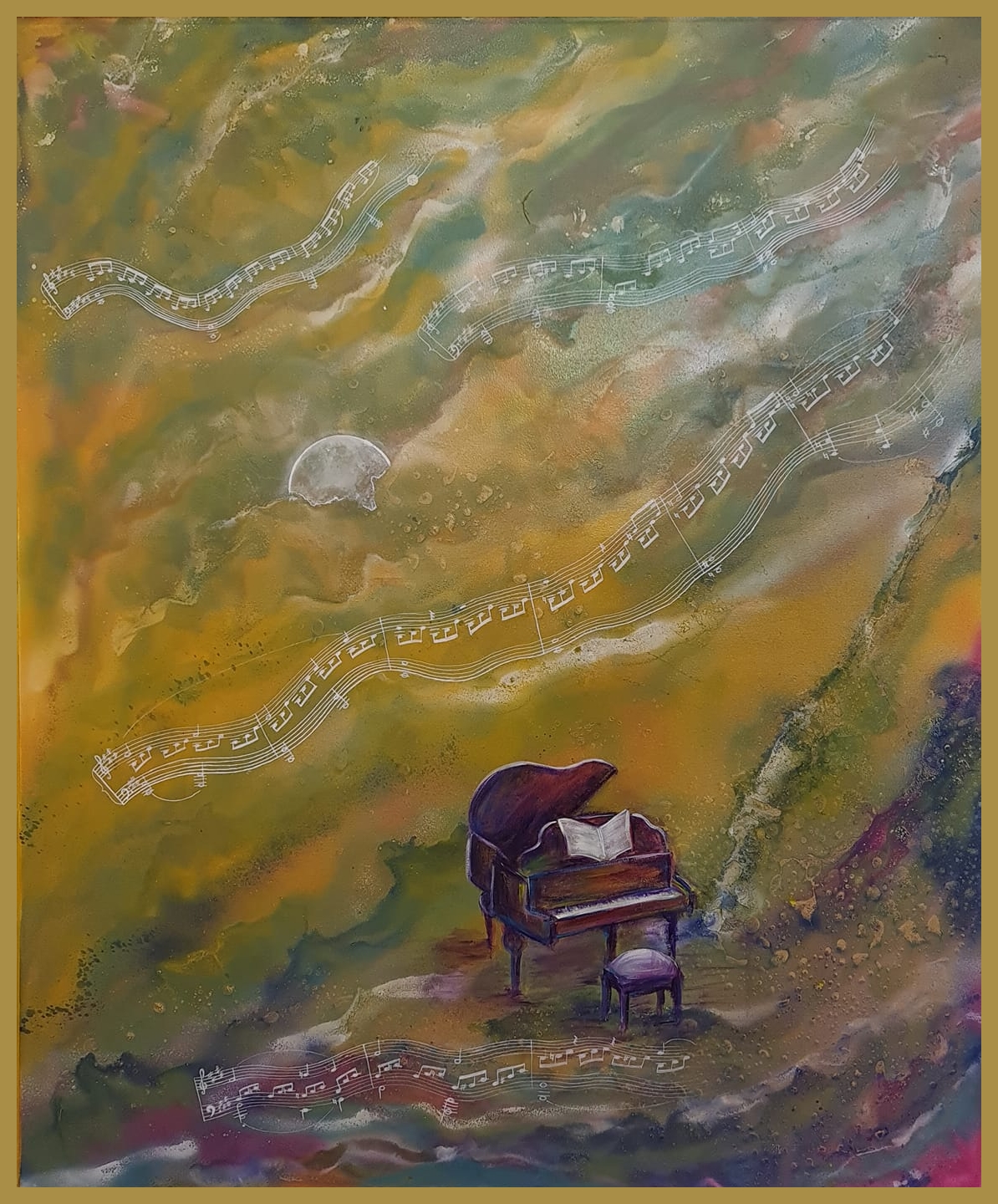
Klavírne motívy v jej tvorbe predstavujú kontrapunktické prepojenie medzi rytmom a farbou. Klavír s jeho rozsiahlym spektrom zvukových možností sa stáva symbolom emocionálnej hĺbky a intelektuálnej reflexie. V jej obrazoch často nájdeme klavír v spojení so živými farbami a dynamickými štruktúrami, ktoré odrážajú melodickú rozmanitosť a rytmickú komplexnosť hudobnej kompozície. Táto kombinácia vytvára dynamické kompozície, kde sa farby prepletajú ako tóny, vytvárajúc komplexnú vizuálnu symfóniu.
Harfa je v jej tvorbe stvárnená ako nástroj nebeských tónov a jemnosti. Jej obrazy, kde sa harfa objavuje, často pôsobia étericky a jemne, akoby zvuky harfy prenikali do priestoru obrazu a vnášali doň pokoj a harmóniu. Tento motív vyjadruje nielen hudobnú, ale aj duchovnú dimenziu, pričom harfa symbolizuje premostenie medzi hmotným a nehmotným svetom. Harfa je často zasadená do kontextu prírody, kde jej jemné struny symbolizujú prepojenie medzi prírodným poriadkom a ľudským duchom.
Hoboj, ktorý v sebe nesie teplý, spevavý zvuk s nádychom melanchólie, má v tvorbe Lucie Takáčovej špeciálne miesto. Je to nástroj, ktorý jej nie je vzdialený – jej mamka je profesionálna hobojistka a hudobníčka v Národnom divadle Košice. Tento osobný vzťah sa odráža v symbolike hoboja ako nástroja, ktorý vyjadruje jemnosť, cit a hlboké vnútorné prežívanie.
Hoboj sa v jej obrazoch často objavuje ako symbol introspekcie a duchovného dialógu. Jeho zobrazenie je prepojené s motívmi ticha a pokoja, ktoré sú v jej tvorbe časté. Hobojové motívy sú často prepletené s jemnými farebnými tónmi, ktoré pripomínajú prírodné prvky, akoby samotná príroda hrala tichú melódiu na hoboj. Tento nástroj sa tak stáva symbolom hlbokého vnútorného hlasu, ktorý je prepojený nielen s osobnou, ale aj rodinnou históriou Lucie Takáčovej.
Hobojová línia v jej tvorbe symbolizuje hľadanie rovnováhy medzi vonkajším a vnútorným svetom, medzi ruchom každodennosti a tichom meditácie. Luciina mamka ako hobojistka priniesla do jej života tento jemný poetický zvuk, ktorý je v jej obrazoch prítomný v podobe jemných farebných prechodov a harmonických kompozícií. Pre Luciu má hoboj symbolický význam prepojenia medzi generáciami a odkazuje na rodinnú hudobnú tradíciu, ktorá jej poskytuje hlboké emocionálne a umelecké základy.
Hudobné nástroje v tvorbe Lucie Takáčovej nie sú len estetickými objektmi, ale hlboko prepracovanými symbolmi, ktoré nesú osobné a rodinné odkazy. Husle, ktoré predstavujú jej dedičstvo po otcovi a babke, hoboj, ktorý je spojený s jej mamou, či ďalšie nástroje, ktoré sa objavujú v jej dielach, vytvárajú komplexný obraz jej vnútorného sveta. Tieto motívy sa prepletajú s prírodnými elementmi a duchovnými symbolmi, čím vzniká jedinečná symfónia farieb, tvarov a zvukov, ktorá oslovuje diváka nielen vizuálne, ale aj emocionálne. Lucia Takáčová tak svojou tvorbou otvára priestor pre hlboké rozjímanie nad vzťahom medzi umením, hudbou a ľudskou skúsenosťou.
Lucia Takáčová vo svojej výtvarnej technike pôsobivo kombinuje prvky realizmu a abstrakcie, čím vytvára diela, ktoré vyžarujú silnú vizuálnu aj emocionálnu energiu. Jej tvorba je charakteristická precíznymi detailmi, predovšetkým v zobrazení hudobných motívov, ktoré sa nesú ako výrazný symbolický prvok naprieč jej prácou. Hudobné nástroje, ako husle, klavír či hoboj, sú v jej obrazoch dôležitými centrálnymi bodmi, čo možno pripísať jej hlbokému rodinnému prepojeniu s hudbou.
Okrem realistických prvkov sa Lucia venuje aj abstrakcii, ktorú demonštruje v pozadiach svojich diel, kde používa dynamické farebné kombinácie a experimentuje s rôznorodými textúrami. Táto voľnosť v prejave dáva jej obrazom hĺbku a vnútorný pohyb, pričom kontrast medzi realistickými objektmi v popredí a abstraktným pozadím vytvára zaujímavú vizuálnu súhru.
Jej farebná paleta je bohatá, často využíva jasné a živé farby, ktoré dodávajú jej dielam energiu a expresivitu. Táto kombinácia farieb a realistických detailov naznačuje nielen technickú zručnosť, ale aj umeleckú odvahu posúvať hranice tradičného zobrazenia.
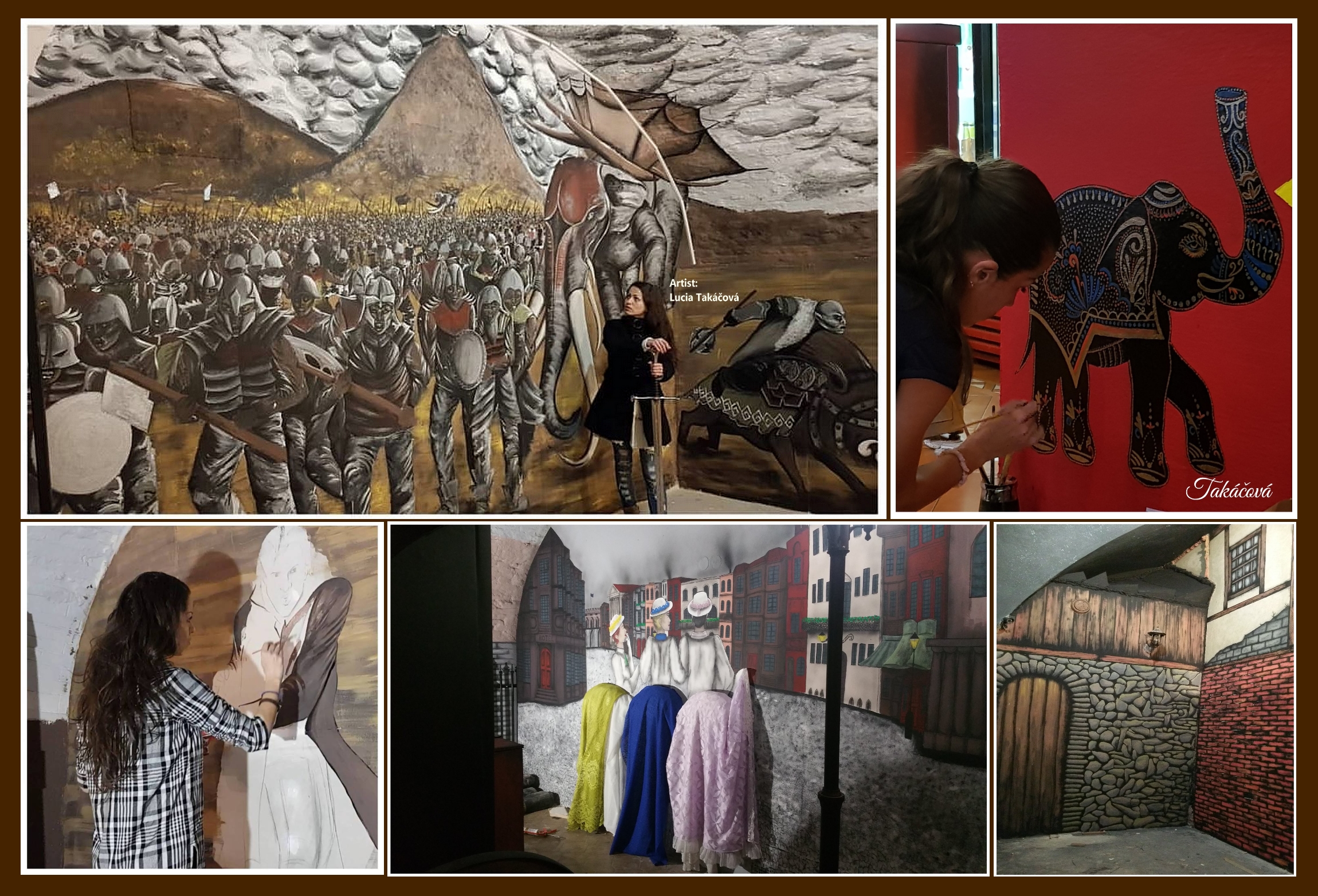
Hoci techniku trompe l'œil (optickú ilúziu) používa prevažne pri nástenných maľbách, jej tvorba je charakteristická práve hrou s perspektívou, kde sa realistické prvky miešajú s abstrakciou, čím vzniká dojem preniknutia do iného sveta, sveta hudobných a výtvarných metafor.

Farebná škála Lucie Takáčovej je bohatá a výrazná, pričom každá farba má svoj špecifický význam:
Červená (ruber): Červená farba je pre umelkyňu symbolom životnej energie, vášne a sily. Objavuje sa v dielach, ktoré vyjadrujú dynamiku a intenzívne emócie. Červená je často kombinovaná so zlatými a oranžovými tónmi, čo vytvára pocit tepla a vitality.
Modrá (caeruleus): Modrá farba v jej tvorbe predstavuje pokoj, introspekciu a duchovnosť. Používa ju na vyjadrenie hlbokých citových stavov a meditácie. Modrá v kombinácii s bielymi tónmi vytvára akúsi transcendentálnu atmosféru, ktorá diváka vedie do tichých a kontemplatívnych priestorov.
Zelená (viridis): Zelená farba symbolizuje prírodu, rast a obnovu. Objavuje sa v obrazoch, kde umelkyňa stvárňuje prírodné motívy, často v spojení s hudbou, čím naznačuje symbiotický vzťah medzi človekom a prírodou. Zelená v jej dielach tiež vyjadruje nádej a harmóniu.
Zlatá (aureus): Zlatá farba je v jej tvorbe symbolom duchovného rozmeru, posvätnosti a transcendentna. Používa ju na zdôraznenie duchovných motívov a mystických prvkov, často v kombinácii s tmavými a kontrastnými farbami, čím vytvára pocit hlbokej spirituality.

V neskoršom období začala Lucia Takáčová do svojej tvorby začleňovať aj spirituálne motívy a symboly. V dielach ako „Shiva Lingam“ alebo „Lord Shiva“ sa objavujú hinduistické prvky, ktoré odkazujú na jej záujem o východné duchovné tradície. Takéto diela sú charakteristické bohatými farebnými kombináciami, kde zlatá a červená dominujú, a kde symboly ako lingam (symbol boha Shivu) alebo sväté mantry vyjadrujú hlboké duchovné posolstvo.
Tieto spirituálne prvky odrážajú snahu o spojenie medzi vnútorným svetom človeka a jeho vonkajším prejavom. Používanie spirituálnych symbolov v jej tvorbe nie je povrchné, ale vychádza z jej hlbokého záujmu o duchovné otázky a hľadanie zmyslu života. Jej diela z tohto obdobia sú akýmsi vizuálnym meditovaním nad podstatou bytia a vzťahu medzi človekom a univerzom.

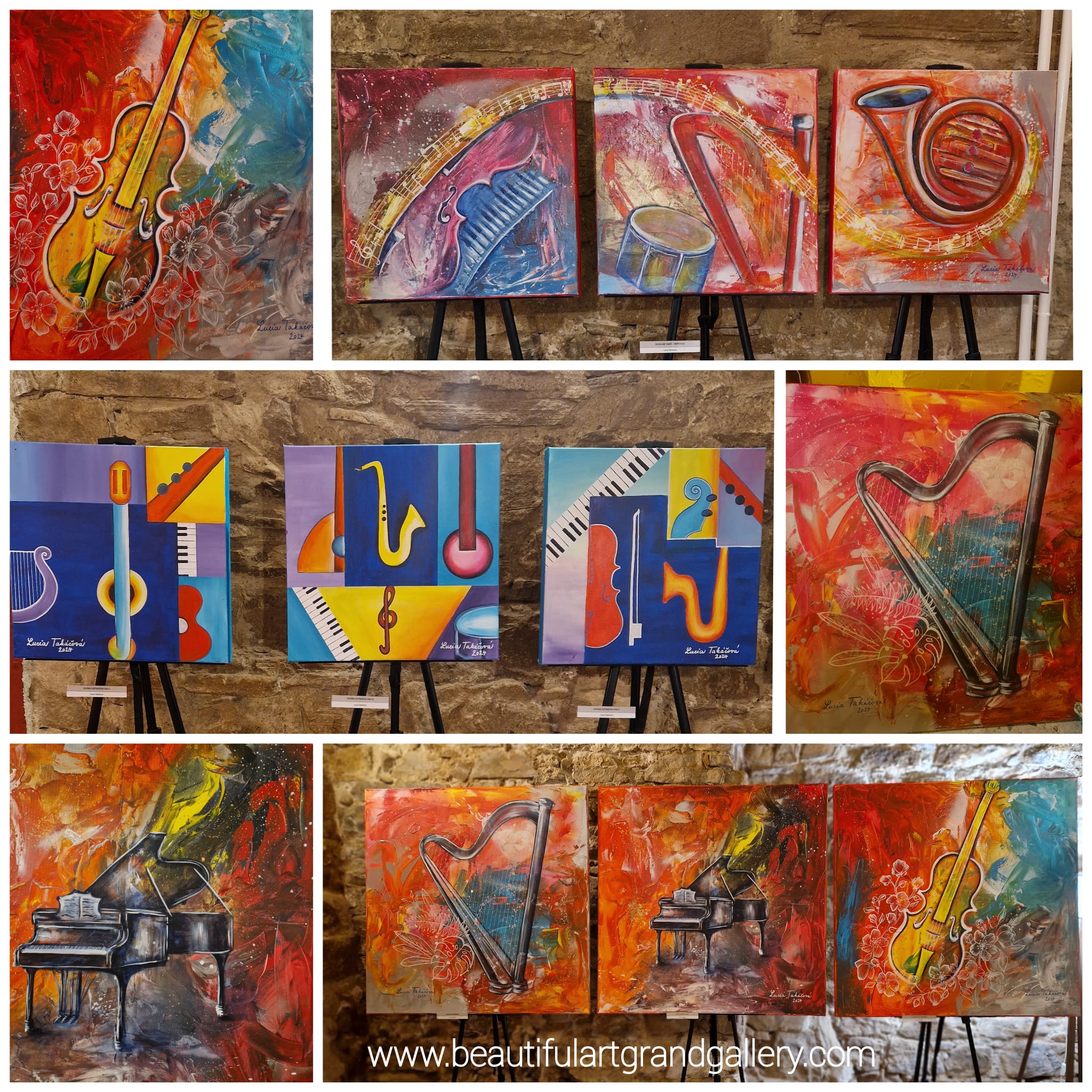
V poslednom období, reprezentovanom výstavou „Via Gaudium“, sa Lucia Takáčová zamerala na pozitívne aspekty života. V tejto sérii dominujú živé farby, ktoré evokujú radosť, energiu a oslavu života. Na obrazoch z tejto výstavy vidíme prepojenie hudobných nástrojov s abstrakciou a prírodnými elementmi, ktoré spolu vytvárajú dynamickú kompozíciu plnú pohybu a života.
Tieto diela sú oslavou prchavých okamihov, ktoré nám život prináša, ich farby a kompozícia odrážajú optimizmus a radosť z každodenných zážitkov.
Lucia Takáčová vo svojej tvorbe jednoznačne reflektuje hlboké prepojenie medzi vizuálnym umením a hudbou. Tieto dve oblasti, hoci sa v bežnej percepcii môžu zdať odlišné, v jej dielach splynuli do jedinečného syntetického prejavu, kde sa farby a tvary stávajú symbolmi tónov a harmónií. Jej cyklus obrazov, zobrazený na fotografii, je výnimočným príkladom toho, ako možno hudbu, abstrakciu a modernistické prístupy spojiť do koherentného vizuálneho výrazu. Ak sa pozrieme na každý obraz samostatne, ale aj na kolektívny dojem, ktorý vyvolávajú, možno konštatovať, že jej výtvarný štýl je prepletený mnohými kultúrnymi a umeleckými referenciami, pričom v každom diele vytvára zložité, no harmonické napätie medzi formou a obsahom.
Farebná škála použitá v týchto obrazoch je intenzívna, dynamická a často kontrastná. Dominujú teplé tóny červenej, oranžovej a žltej, ktoré pôsobia ako vizuálne ekvivalenty zvukových vĺn – rozochvievajú priestor a dodávajú obrazom energiu a pohyb. Táto farebná dynamika nie je len náhodná; každá zvolená farba prispieva k vytvoreniu osobitej nálady, pričom práve teplé tóny evokujú vášeň, drámu a intenzitu hudby. Modré a fialové tóny, ktoré vidíme najmä v geometrickej časti kompozícií, vytvárajú vizuálny kontrapunkt a poskytujú divákovi zmyslovú úľavu, podobne ako tiché medzihry v hudobnej skladbe.
Lucia Takáčová kombinuje tieto farebné vrstvy s výraznou textúrou. Hrubé nánosy farby, ktoré sú miestami takmer plastické, evokujú hudobné vibrácie a rezonancie. Textúra tu zohráva dôležitú úlohu – pomáha vytvoriť dojem priestorovej hĺbky a dovoľuje divákovi "cítiť" hudbu nielen očami, ale aj prostredníctvom zmyslu pre dotyk. Tento technický prístup odkazuje na expresionistické korene, kde je farba používaná nielen ako vizuálny, ale aj emocionálny nástroj.
V niektorých častiach diel, najmä v prostrednej časti série, sú viditeľné výrazné geometrické prvky, ktoré majú svoje korene v kubistických a neoplastických hnutiach. Kubizmus so svojím záujmom o dekompozíciu formy a jej znovuzostavenie v nových, nečakaných vzťahoch, je v týchto dielach prítomný v samotnom rozvrhnutí hudobných nástrojov. Tie sú rozložené do základných geometrických komponentov, ktoré sa následne reorganizujú do nových konfigurácií. Napriek tejto fragmentácii však zostávajú nástroje stále rozpoznateľné – violončelo, trúbka či harfa sú transformované, no nezmiznú úplne v abstrakcii. To, čo tu Lucia Takáčová robí, je veľmi sofistikovaná hra so zážitkom diváka, kde kombinácia abstraktných tvarov vytvára harmonické, no zároveň komplexné vizuálne štruktúry.
Dôležitým aspektom týchto geometrických diel je aj ich farebná jednoduchosť a čistota tvarov. Farebné plochy sú často jednofarebné, pričom pripomínajú prácu Pieta Mondriana alebo Kazimira Maleviča, kde farba a forma existujú v harmonickom napätí. Takáto redukcia formy je cieľavedomá – prostredníctvom geometrie a farebného minimalizmu umožňuje Lucia Takáčová divákovi koncentrovať sa na samotnú podstatu hudobných nástrojov a ich metaforickú hodnotu. Hudba sa v tomto prípade nestáva len inšpiráciou pre vizuálne umenie, ale je doslova vizuálne interpretovaná v štruktúrach a farbách.
Kompozícia v dielach Lucie Takáčovej je starostlivo premyslená, pričom využíva princípy klasickej harmónie a symetrie, ktoré sú obohatené o prvky abstrakcie a expresívnych gest. Vo svojich dielach sa často hrá s rôznymi perspektívami a zornými uhlami, ktoré umožňujú divákovi preskúmavať obraz z rôznych hľadísk. Hudobné nástroje a prírodné motívy sú v jej tvorbe zasadené do dynamických kompozícií, kde sa preplietajú a vytvárajú vizuálne napätie.
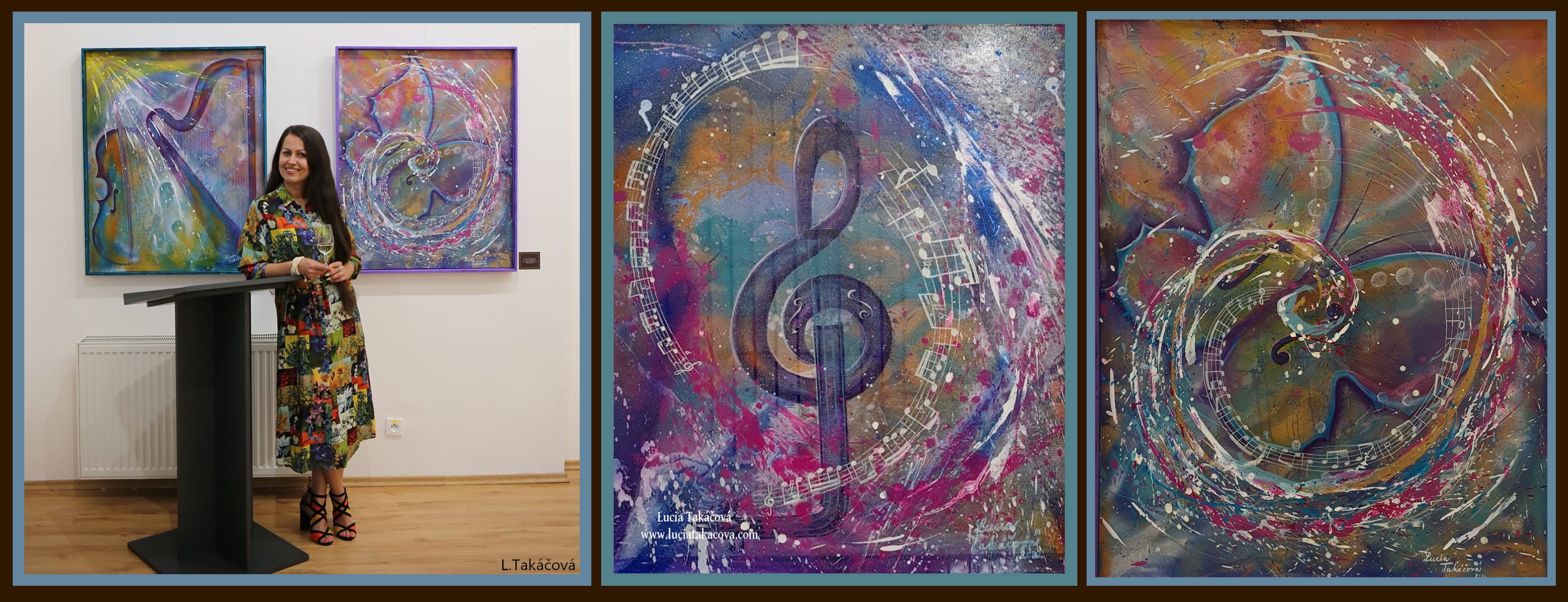
Lucia Takáčová vo svojich dielach často využíva abstrakciu, aby vytvorila priestor pre divákovu predstavivosť. Jej abstraktné pozadia, plné jemných prechodov farieb a textúr, kontrastujú s realistickými zobrazeniami hudobných nástrojov, čím vytvárajú hĺbku a vnútorné napätie obrazu. Symboly, ktoré používa, nie sú vždy zjavné, ale ich význam sa odhaľuje postupne, čím divákovi ponúka možnosť objaviť skryté vrstvy jej tvorby.
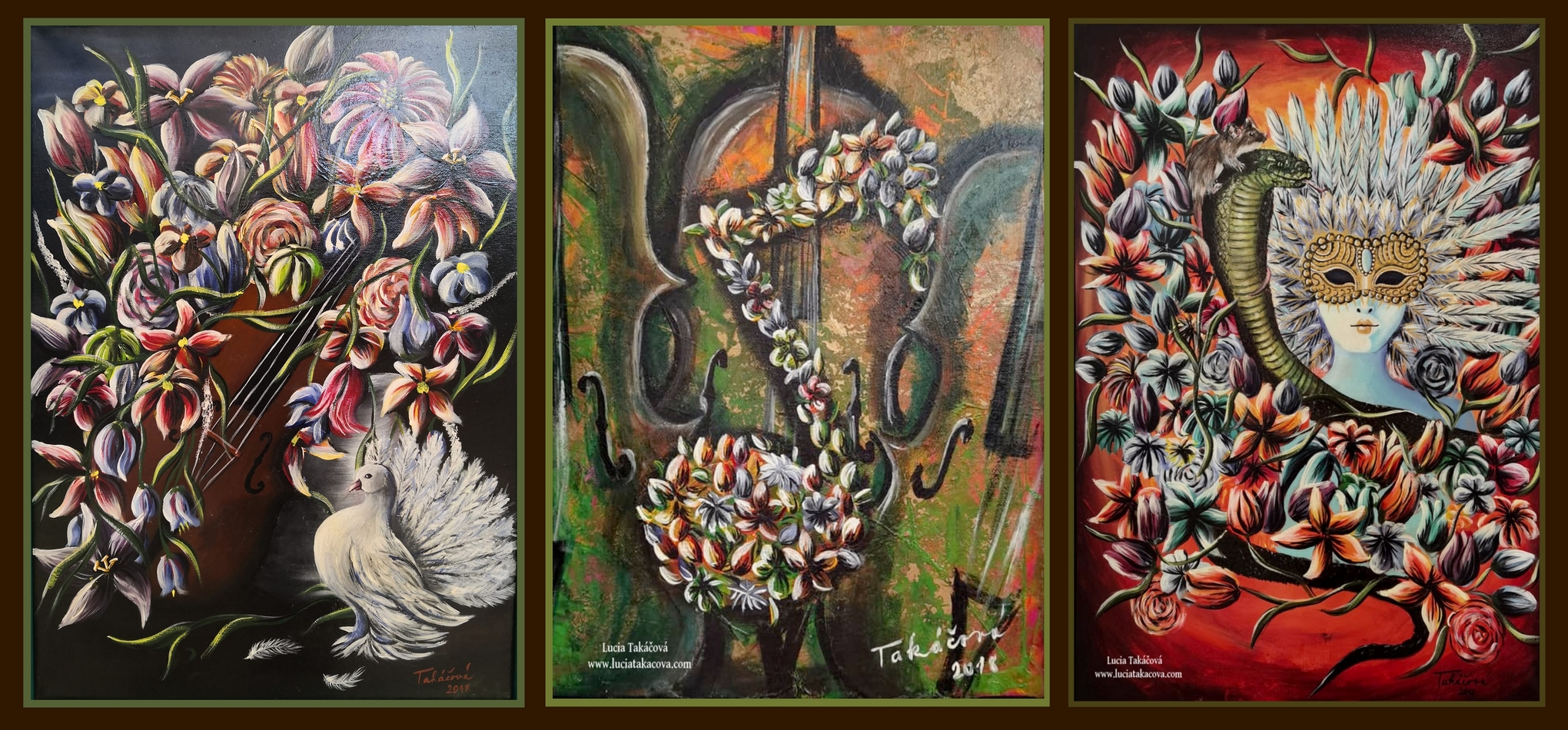
Obraz v pravo:
Dielo „Madama Butterfly“ s rozmermi 100 x 80 cm je fascinujúcim príkladom toho, ako Lucia Takáčová dokáže prepájať výtvarné umenie s hlbokými hudobnými a emocionálnymi podtónmi. Toto dielo inšpirované operou Giacoma Pucciniho, stelesňuje tragický príbeh postavy, ktorá čelí zrade a obetovaniu. Kompozícia a farebná paleta obrazu nesú silné metaforické odkazy na tieto dramatické témy.
Kompozícia a symbolika: Centrálna časť diela je vystavaná na vírivých formách a dynamickej štruktúre. V centre obrazu sa odohráva pohyb, ktorý akoby smeroval von z epicentra a víril všetko naokolo. Tento dynamický vír evokuje neustálu zmenu a premenlivosť – podobne ako osud Madama Butterfly, ktorý sa vyvíja od lásky k tragédii. Okolo tohto víru sú vykreslené hudobné noty, ktoré vytvárajú metaforickú notovú osnovu. Tento prvok je jemný, avšak jasne definovaný, a pripomína, že hudba je esenciálnou časťou nielen opery, ale aj celkového vyznenia diela.
Farebná paleta: Lucia Takáčová pracuje s kontrastmi teplých a studených farieb, pričom jemné odtiene modrej a fialovej sú doplnené ružovou, oranžovou a zlatistými odtieňmi. Tieto farebné kombinácie evokujú silné emócie – od jemnej melanchólie a nostalgie, až po vášeň a dramatický konflikt. Farby sú nanášané v rôznych vrstvách, čo vytvára dojem hĺbky a priestoru. Vrchné vrstvy farby sa miestami rozbíjajú na dynamické šplechy a ťahy štetcom, čím vzniká vizuálne napätie. Tento farebný kontrast vyjadruje vnútorné boje postavy z opery – jej túžbu, utrpenie a osudovú cestu k tragédii.
Dynamika a pohyb: Vírivé formy a splývajúce línie v diele vytvárajú intenzívny dojem pohybu. Divák má pocit, že celý obraz sa neustále točí, akoby bol v neustálom premenlivom pohybe. Tento dojem vírenia je podporený spleťou farieb a jemných línií, ktoré tvoria abstraktné vzory evokujúce hudobné vlny. Pohyb v tomto diele nesymbolizuje len hudbu, ale aj vnútorný boj postavy, ktorý je plný náhlych obratov a emocionálnych zvratov.
Notové osnovy a hudobné motívy: Notová osnova a jednotlivé noty danej opery sú zakomponované do kompozície tak, že vyvolávajú dojem hudby, ktorá neustále prebieha. Tieto hudobné motívy sú jemne prepletené s farebnými vírmi a vytvárajú tak vizuálny ekvivalent hudby. Hudba tu nie je len prítomná ako inšpirácia, ale doslova ožíva a stáva sa neoddeliteľnou súčasťou obrazu.
Technika a textúra: Lucia Takáčová vo svojej technike kombinuje viaceré prístupy, pričom sa zameriava na vrstvenie farieb a expresívne ťahy štetcom. Farby sú nanášané vo viacerých vrstvách, miestami splývajú, inde sa ostro rozdeľujú, čo dodáva obrazu energiu a živelnosť. Tento štýl sa približuje abstraktnému expresionizmu, kde každý ťah štetcom a každá farebná kombinácia nesú svoj emocionálny náboj. Technika tak prispieva k intenzívnej atmosfére diela, ktorá je v súlade s dramatickou hudobnou predlohou.
Záver: „Madama Butterfly“ je dielo, ktoré dokonale spája výtvarnú a hudobnú rovinu. Lucia Takáčová vo svojej práci majstrovsky využíva farby, dynamiku a symboliku, aby vyjadrila zložité emócie a dramatické napätie. Tento obraz je nielen vizuálnou poctou hudbe, ale aj hlbokou interpretáciou tragédie a premenlivosti života. Farby, pohyb a hudobné prvky v diele spolu tvoria harmonický celok, ktorý oslovuje diváka na mnohých úrovniach.
Obraz v strede:
Dielo „Caprice“ s rozmermi 50 x 70 cm, vytvorené Luciou Takáčovou, predstavuje spojenie hudobných a výtvarných prvkov, ktoré sú pre autorku typické. Tento obraz sa svojou kompozíciou a výraznými symbolmi hlboko ponára do sveta hudby, konkrétne sa zameriava na zachytenie podstaty melódie a rytmu diel svetoznámeho Paganiniho. Názov „Caprice“ odkazuje na hudobnú formu, ktorá je voľná, hravá a často plná technických výziev. Táto idea voľnosti a hravosti je evidentná aj v samotnom vizuálnom spracovaní diela.
Kompozícia a symbolika: V centre diela dominuje hudobný symbol – kruhový motív notovej osnovy, ktorý obopína ústredný prvok kompozície. Tento kruhový tvar evokuje neustály pohyb a kontinuitu, čím symbolizuje tok hudby, ktorá nikdy nekončí, ale neustále plynie. Noty, ktoré sa vznášajú okolo, sú dôležitým symbolom dynamiky a rytmu. Je zaujímavé, ako je tento geometrický tvar prepojený s notami a zároveň abstraktnými elementmi, ktoré sa rozlievajú a splývajú cez celý povrch plátna.
Farebná paleta: Farebné tóny sú živé a kontrastné, pričom prevládajú teplé odtiene oranžovej, fialovej a ružovej v kombinácii s chladnejšími modrými a zelenými odtieňmi. Tento farebný kontrast vytvára dynamiku a napätie, čo vyvoláva pocit radosti a voľnosti, podobne ako pri hudobnej forme caprice. Nanášanie farieb v rôznych vrstvách a špliechanie farby prispieva k expresívnej atmosfére obrazu a zvýrazňuje pohyb.
Dynamika a pohyb: Víry farieb a notová osnova sa navzájom prelínajú, čím vytvárajú dojem neustálej akcie a nepredvídateľnosti, ktorá je základom formy caprice. Lucia Takáčová tu pracuje s prvkami expresionizmu, kde sa farba a pohyb stávajú nástrojom na vyjadrenie emócií. Tento prístup umožňuje obrazu pôsobiť ako vizuálna interpretácia hudby – plynulej, energickej a spontánnej. Všetko na plátne sa zdá byť v pohybe, akoby sa melódie z notovej osnovy v obraze šírili do priestoru.
Technika a prevedenie: Autorka používa vrstvenie farieb a rôzne maliarske techniky, aby dosiahla hĺbku a textúru. Špliechanie farby a dynamické ťahy štetcom vytvárajú intenzívnu vizuálnu energiu. Jej technika je voľná, hravá a otvorená interpretácii, čo je úplne v súlade s konceptom hudobného caprice – improvizovaného a nepredvídateľného hudobného útvaru. Týmto spôsobom Lucia Takáčová vytvára dielo, ktoré nielen zobrazuje hudbu, ale doslova ju prenáša na plátno prostredníctvom farieb a tvarov.
Záver: Dielo „Caprice“ je pútavým vizuálnym výtvorom, ktorý spája hudbu a výtvarné umenie do jedného harmonického celku. Lucia Takáčová tu prostredníctvom farieb, tvarov a symbolov vytvára obraz plný pohybu a energie, ktorý zachytáva podstatu hudobnej voľnosti a radosti. Farby a dynamika obrazu odrážajú hravosť a improvizáciu typickú pre hudobnú formu caprice, čím divákom ponúka hlboký a emocionálny zážitok.
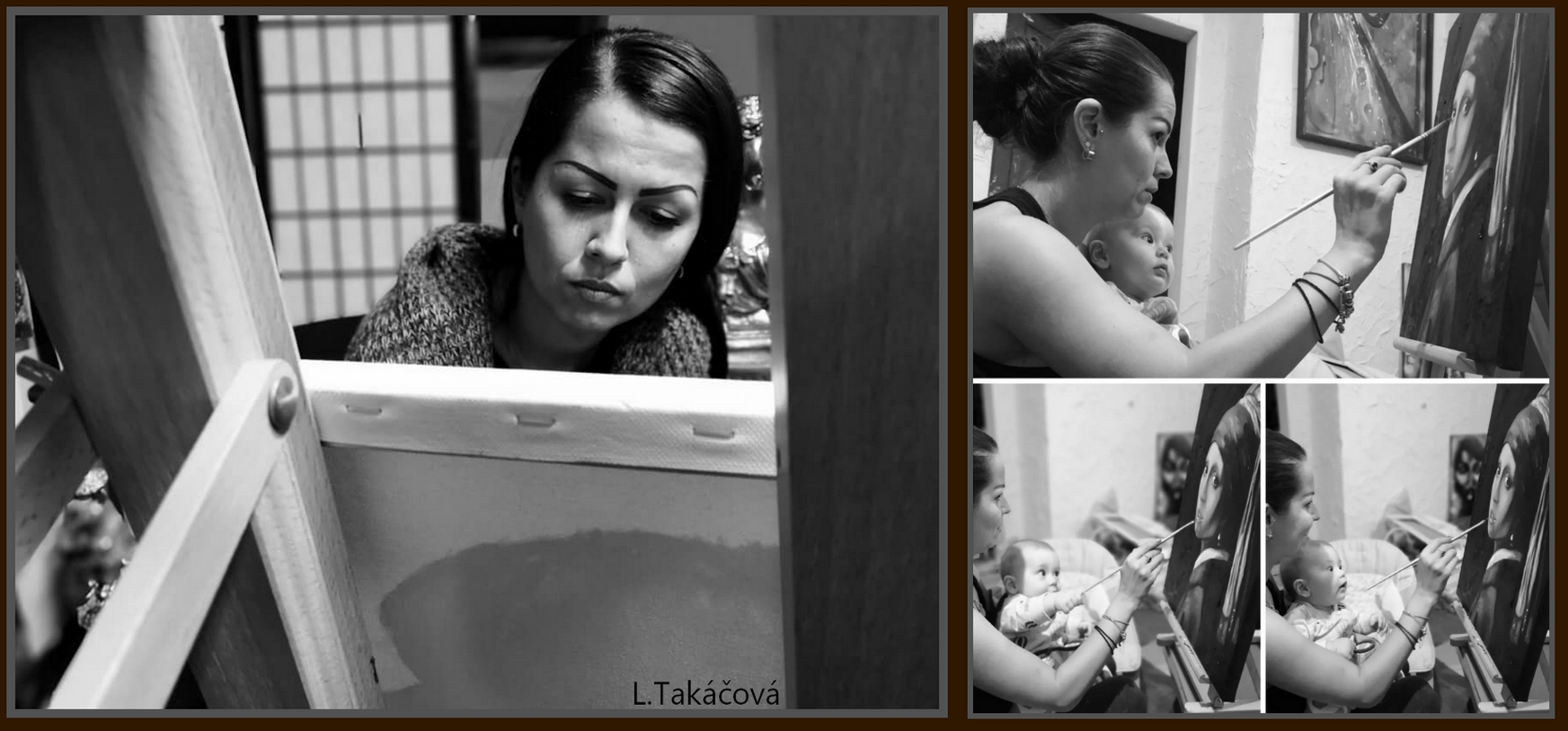
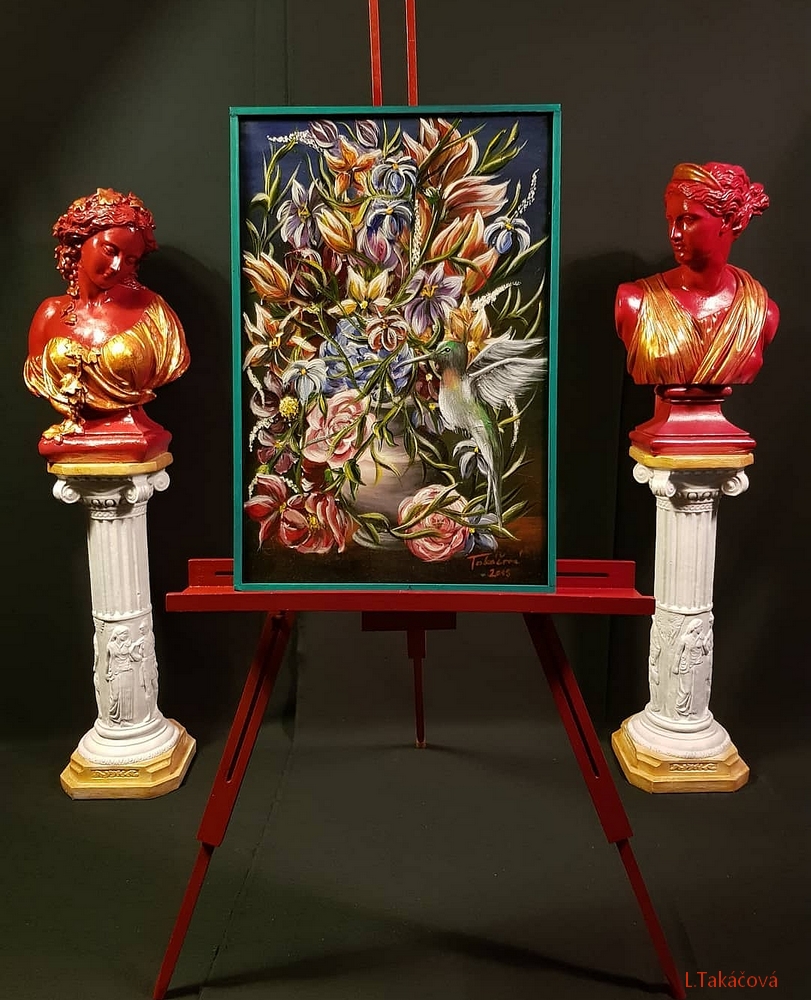
Lucia Takáčová je výtvarníčka, ktorá sa dokáže plynulo pohybovať medzi rôznymi maliarskymi štýlmi a technikami, pričom okrem abstraktných kompozícií bravúrne zvláda aj realistickú maľbu. Jej schopnosť vytvoriť realistické diela, plné detailov a precíznosti, ukazuje, že má pevné základy vo výtvarných technikách a dôkladné porozumenie proporciám, perspektíve a svetlu.
Pri realistickej tvorbe, ktorá často dopĺňa jej abstraktné výboje, sa Lucia sústreďuje na detailnú kresbu a presnú reprezentáciu objektov, alebo portrétov, pričom jej diela zachovávajú autentickosť a výraznosť. Často sa venuje zobrazeniu konkrétnych motívov, najmä hudobných nástrojov, ale aj postáv, pričom sa zameriava na ich textúru a tvar s rovnakou pozornosťou k detailom, akú vkladá do svojich abstraktných kompozícií.
Pri realistických dielach dokáže pracovať s jemnými prechodmi svetla a tieňa, čím dodáva svojim obrazom hĺbku a trojrozmernosť. Tieto technické zručnosti ukazujú, že Lucia nielen experimentuje so spontánnosťou a expresiou, ale ovláda aj kontrolovanú a disciplinovanú prácu, ktorá je potrebná pri realistickej maľbe. Týmto spôsobom vie dokonale prepojiť svoje abstraktné a realistické tendencie, čím obohacuje svoj umelecký prejav o široké spektrum výrazových prostriedkov.
Realistické obrazy Lucie Takáčovej sú dôkazom jej všestrannosti a schopnosti prepojiť svet reálnej a abstraktnej maľby. Tým vytvára komplexné vizuálne diela, ktoré oslovujú divákov na rôznych úrovniach – či už estetickou krásou, technickou zručnosťou alebo emocionálnou hĺbkou.
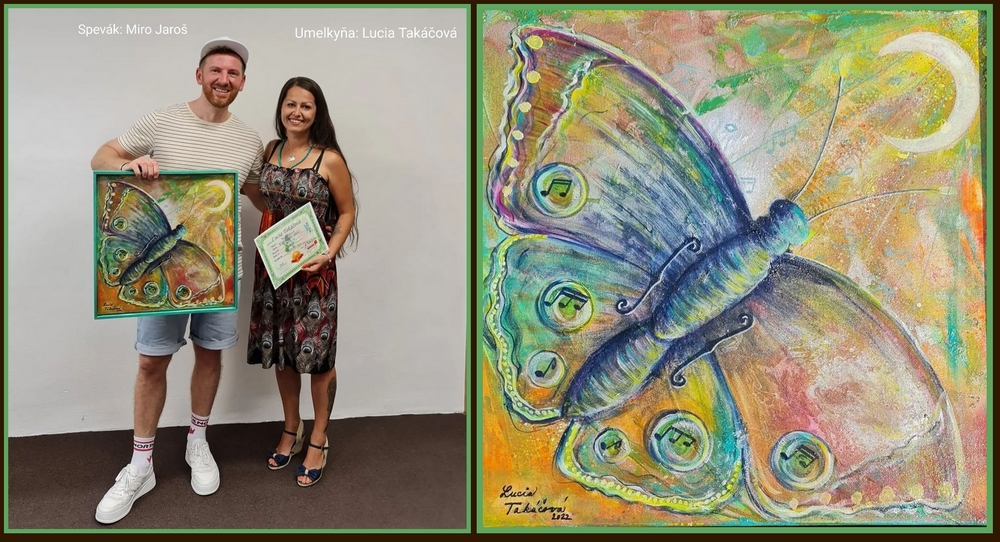
Jedným z dôležitých aspektov tvorby Lucie Takáčovej je interakcia s divákom. Jej diela nepredstavujú len pasívne objekty na obdivovanie, ale výzvu pre diváka, aby sa aktívne zapojil do procesu vnímania a interpretácie. Tým, že využíva bohatú symboliku a abstrakciu, vytvára priestor pre osobné interpretácie a umožňuje divákovi nachádzať vlastné významy. Jej obrazy sú otvoreným dialógom, ktorý vyžaduje divákovu aktívnu účasť a schopnosť čítať medzi riadkami.
Lucia často používa kontrasty medzi farbou a tvarom, ktoré vťahujú diváka do hry s perspektívou a umožňujú mu objavovať nové dimenzie obrazu. Tieto kontrasty vytvárajú dynamiku a napätie, ktoré diváka nútia preskúmavať obraz do hĺbky a objavovať nové detaily, ktoré nie sú na prvý pohľad zrejmé a je dôležité pochopiť, že v dielach sa skrýva hudobná symbolika.

Lucia Takáčová čerpá inšpiráciu nielen z hudby, ale aj z rôznych kultúrnych tradícií.
Lucia Takáčová sa v tomto diele inšpirovala dynamikou a spiritualitou Etno a Reggae kultúry. Triptych sa nesie v teplých tónoch žltej, zelenej a zemitých odtieňov, ktoré evokujú prírodné prvky, teplo slnka a hudobné rytmy. V centre kompozície sú hudobné nástroje, ktoré pripomínajú tradičné etno nástroje – bubny, sitár a iné nástroje – čím výtvarníčka odkazuje na hlboké prepojenie hudby s prírodou a duševnou energiou týchto kultúr.
Hudobné motívy v tomto diele symbolizujú slobodu, kreativitu a rytmus života, pričom plynulosť farieb a jemné kontúry podporujú dojem pohybu a rytmickej harmónie. Hudobné nástroje sa zdajú byť živé, akoby z nich vychádzali vibrácie, čo dodáva dielu pocit ľahkosti a zároveň bohatstva. Tento triptych teda oslavuje nielen hudbu, ale aj kultúru, ktorá ju podporuje a je dôkazom Luciinej schopnosti prenášať na plátno túto esenciu v organických a živých formách.
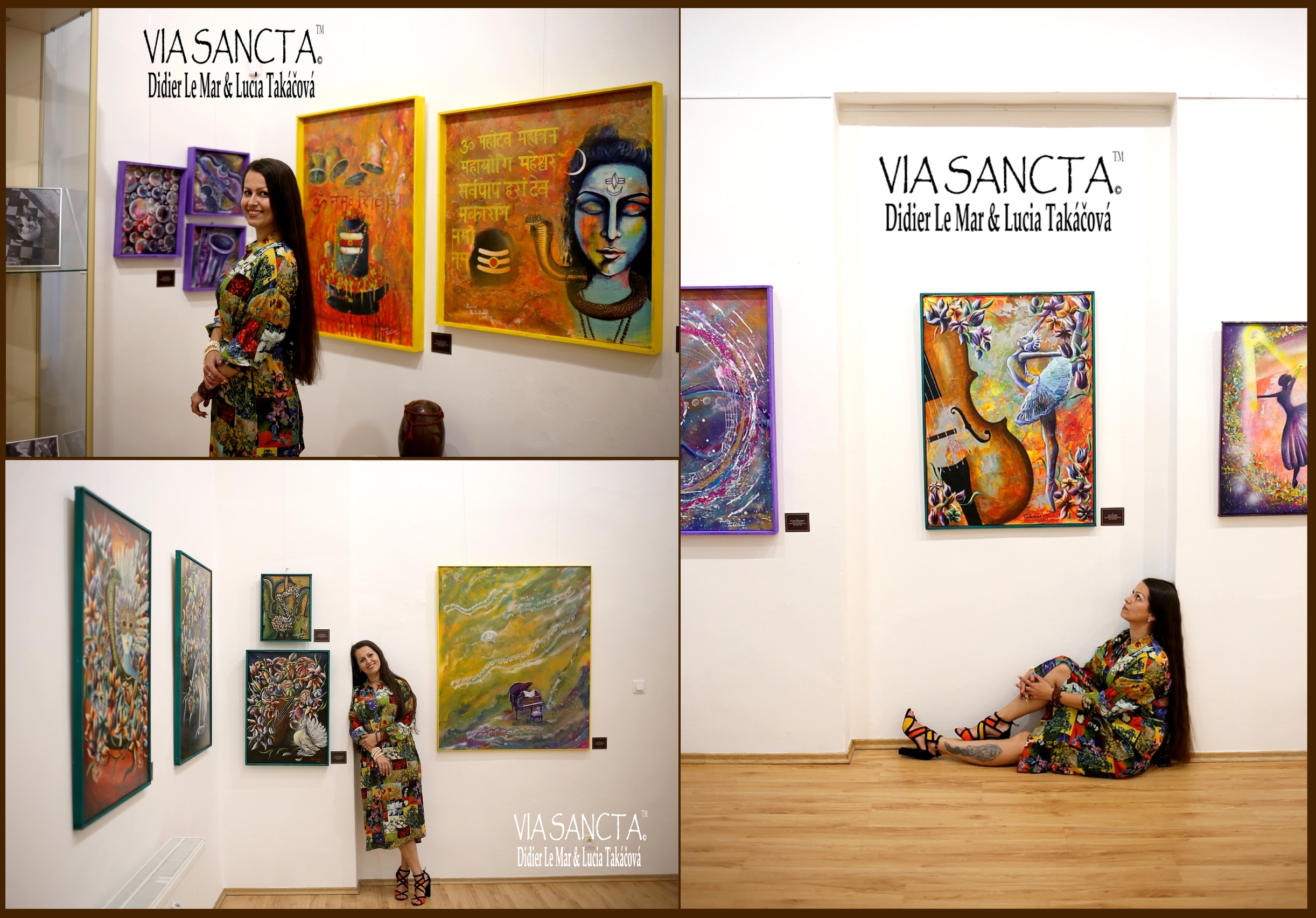
Lucia Takáčová je dnes uznávaná pre svoj jedinečný štýl a schopnosť spájať rôzne druhy umenia do harmonického celku. Jej tvorba získala pozitívne ohlasy nielen na Slovensku, ale aj v zahraničí. Výstavy ako „Via Sancta“ a „Via Gaudium“ ukázali, že jej diela dokážu osloviť široké spektrum divákov, ktorí v nich nachádzajú krásu, hlboký obsah a inšpiráciu. Jej maľby nielenže fascinujú svojou technickou dokonalosťou a farebnou harmóniou, ale aj svojou schopnosťou rozprávať príbehy a vyvolávať silné emócie. Výstava „Via Sancta“ prilákala viac ako 4500 návštevníkov a svojou duchovnou atmosférou, umocnenou vôňou vzácnych kadidiel a oudhového dreva, vytvorila priestor na hlboké vnútorné ponorenie. Svojou návštevou poctil vernisáž aj Eparchiálny biskup Prof. ThDr. ICODr. Cyril Vasiľ, SJ, PhD.
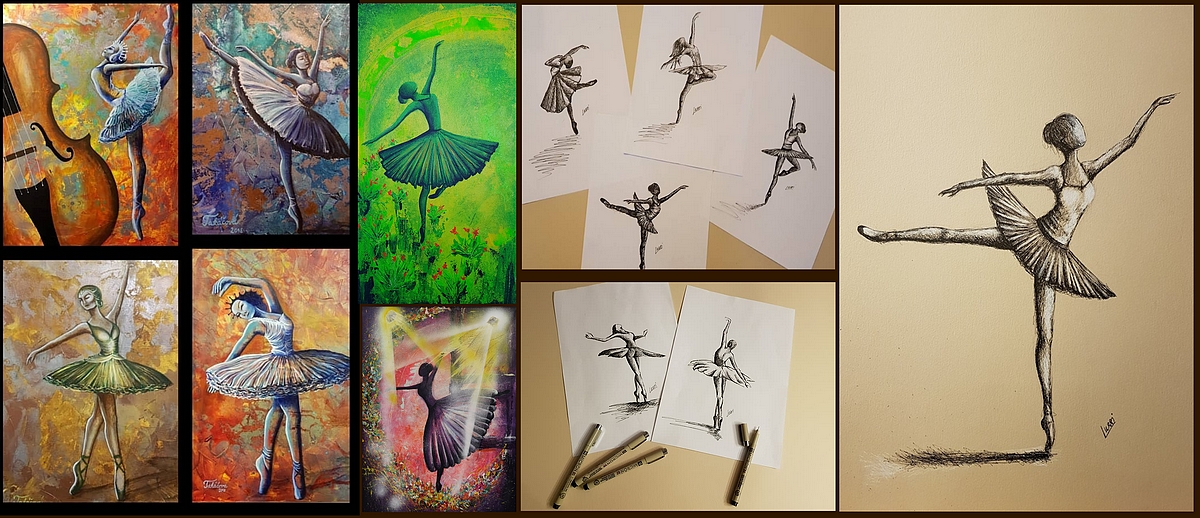
Baletné obdobie:
Lucia Takáčová svojou baletnou sériou nadväzuje na jemnosť a eleganciu pohybu, pričom jej tvorba evokuje paralely s dielami významných španielskych umelcov.
Jedným z nich je Joaquín Sorolla, ktorý vo svojich obrazoch dokázal zachytiť pohyb a svetlo s neuveriteľnou zručnosťou. Rovnako ako Sorolla dokázal pomocou farieb a svetelných efektov oživiť scény z každodenného života, Lucia využíva svetlo a farebné kontrasty, aby zdôraznila ladnosť baletiek a ich tanec. Jej baletné postavy akoby žiarili pod jemným svetlom reflektorov, vytvárajúc tak atmosféru plnú energie a radosti, čo evokuje Sorollove svetelné hry.
Ďalším autorom, ktorý sa núka na prirovnanie, je Julio González, známy pre svoje majstrovské ovládanie línií a priestoru. Hoci bol González predovšetkým sochárom, jeho schopnosť zachytiť pohyb a formu v jednoduchých líniách nájdeme aj v Luciiných dielach. Jej baletky sa vyznačujú čistotou formy a minimalistickými líniami, ktoré však nesú silný emocionálny náboj, podobne ako Gonzálezove diela. Lucia, podobne ako González, využíva tento geometrický prístup na vyjadrenie jemnosti a elegancie tela v pohybe.
Týmto spôsobom Lucia Takáčová kombinuje jemnosť farieb, svetlo a eleganciu línií, čo jej diela prepája so španielskou tradíciou, ale zároveň jej tvorba prináša svieži a osobitý prístup k zobrazeniu tanca a baletu.

Lucia Takáčová vo svojom "Období dramatických divadelných portrétov" ponára diváka do emocionálneho sveta hlbokých psychologických a vizuálnych vrstiev. V tomto cykle sú tváre zobrazené s fascinujúcou kombináciou expresionistickej intenzity a abstraktných farieb, ktoré sa na prvý pohľad zdajú byť roztrieštené, no pri detailnejšom skúmaní odhaľujú hlboké emocionálne napätie. Farby tu zohrávajú ústrednú úlohu – ich kontrastná živelnosť a surová aplikácia symbolizujú vnútorný rozpor postáv, akoby zachytávali okamih introspekcie pred rozhodujúcim dramatickým činom.
Kompozícia týchto portrétov zrkadlí divadelné napätie: každý ťah štetca vytvára atmosféru neistoty a tajomstva. Tvár, často fragmentovaná alebo prekrývaná, vyjadruje neurčitosť ľudskej identity a zdanlivý rozpor medzi vnútornou a vonkajšou realitou, čo je príznačné pre výrazy moderného divadla. Táto fascinujúca hra s emocionálnymi vrstvami pripomína tvorbu španielskych modernistov, akými boli Antoni Tàpies či Manuel Viola, ktorí podobne experimentovali s psychologickou hĺbkou a expresiou prostredníctvom farby a textúry.
Diela Lucie Takáčovej v tomto období sú dôkazom jej schopnosti balansovať medzi abstrakciou a figuráciou, pričom divákovi umožňujú osobné čítanie emocionálnych kódov, ktoré sú prítomné v tvárach jej postáv. Hra svetla, tieňa a surových ťahov vytvára pocit vnútorného konfliktu a dramatického vyvrcholenia, podobne ako intenzívny moment v divadelnom predstavení, kde masky padajú a odhaľuje sa pravá podstata postáv.

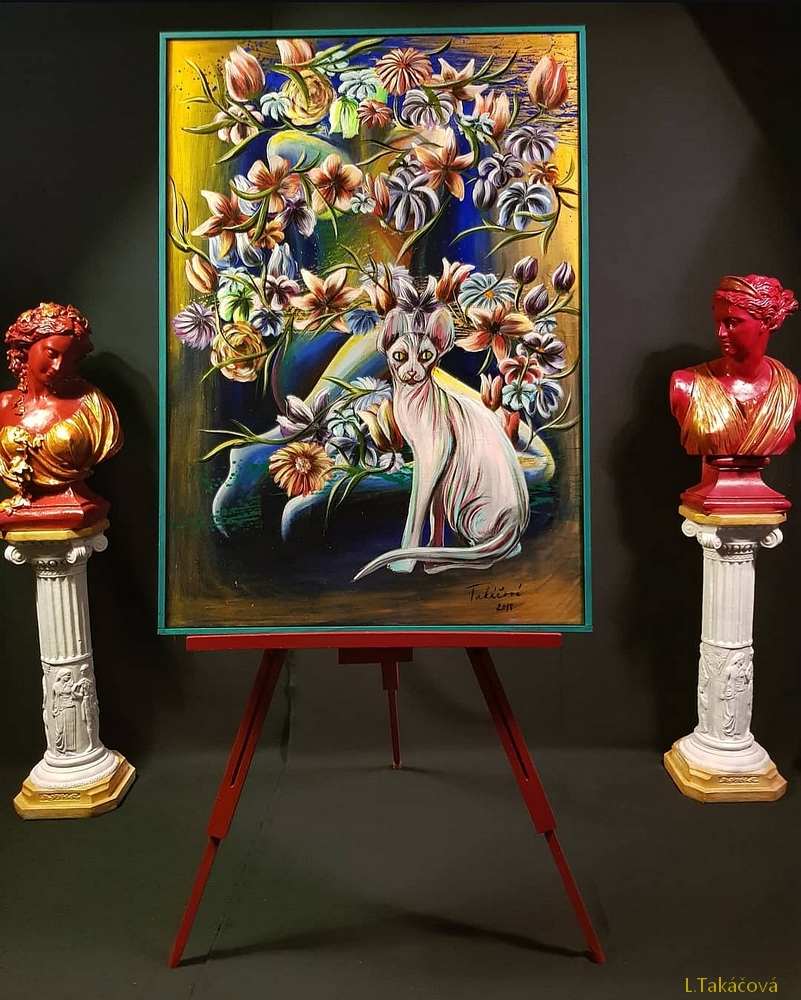
Autorka: Lucia Takáčová
Názov diela: Siedmy zmysel
Technika: kombinovaná
Odborný rozbor diela "Siedmy zmysel" od Lucie Takáčovej
Dielo "Siedmy zmysel" od Lucie Takáčovej je bohaté na symboliku a emocionálnu hĺbku, ktorou autorka odkrýva tajomstvo intuitívneho vnímania a spojenia medzi prírodou a zvieratami. V centre diela sa nachádza bezsrstá mačka, ktorá svojím výrazom a postojom pôsobí ako mystický strážca obklopený nádhernou kvetinovou kompozíciou. Lucia Takáčová v tomto diele opäť ukazuje svoju fascináciu prírodou, farbami a živelnou silou života.
Kompozícia a symbolika
Mačka, ktorá je ústredným prvkom diela, symbolizuje tajomnosť a vnútorné vedomie – prvky často spájané s duchovným svetom a nadprirodzenom. Mačky sú tradične vnímané ako symboly intuície a magickej sily, čo je v súlade s názvom diela "Siedmy zmysel", ktorý odkazuje na schopnosť vnímať viac než len to, čo je viditeľné bežnými zmyslami. Okolitá kvetinová kompozícia dodáva dielu prírodnú energiu, ktorá obklopuje a podporuje hlavný subjekt. Kvety v rôznych štádiách kvitnutia môžu predstavovať životné cykly a zároveň zosilňujú pocit dynamiky a prepojenia medzi mačkou a jej prostredím.
Pozadie obrazu je žiarivé a plné kontrastov medzi teplými a chladnými tónmi, čo vytvára pocit snovosti a iluzórnosti. Tento senzitívny priestor, v ktorom sa mačka nachádza, môže byť interpretovaný ako metafora pre vnútorný svet, kde intuícia a pocity hrajú kľúčovú úlohu v porozumení sveta.
Farebná paleta a jej význam
Farebná paleta diela je mimoriadne živá a intenzívna, čím Lucia Takáčová zvýrazňuje emocionálny náboj obrazu. Dominantné sú sýte odtiene zelenej, modrej a fialovej, ktoré sú kombinované s teplými oranžovými a žltými tónmi kvetov. Tento kontrast symbolizuje vnútorný boj medzi pokojom a energiou, medzi vedomým a nevedomým, ktoré spolu tvoria celkový zmyslový zážitok.
Živé farby kvetov evokujú radosť a pohyb, zatiaľ čo tmavšie a chladnejšie tóny pozadia dávajú obrazu mystický a introspektívny charakter. Mačka samotná je zobrazená s použitím jemných prechodov farieb, ktoré jej dávajú hladkosť a eterealitu, akoby bola prítomná aj neprítomná zároveň. Tento farebný prístup posilňuje pocit, že mačka má prístup k dimenziám mimo nášho bežného vnímania.
Technika a textúra
Lucia Takáčová využíva kombinovanú techniku, čo jej umožňuje experimentovať s textúrami a farbami. Kvetiny sú zobrazené s jemnými ťahmi štetcom, pričom majú trojrozmerný efekt, čo dodáva dielu dynamiku a hĺbku. Povrch obrazu je hladký, s plynulými prechodmi medzi farbami, čo prispieva k dojmu snového a nadprirodzeného sveta. Textúra obrazu, najmä v mačkinej koži a lístkoch kvetov, vytvára jemnosť, ktorá umocňuje tajomnosť celkovej scény.
Symbolický a psychologický rozmer
Mačka v tomto diele je stelesnením intuície a psychologického vnímania, pričom pôsobí ako sprostredkovateľ medzi dvoma svetmi – svetom prírody a svetom duchovna. Jej oči, ktoré sú zobrazené s veľkým dôrazom, pôsobia prenikavo a akoby videli cez fyzický svet do niečoho hlbšieho. Táto symbolika mačky ako tvora, ktorý prechádza medzi rôznymi realitami, je hlboko zakorenená v mnohých kultúrach, čo dodáva dielu univerzálny duchovný rozmer.
Dielo tiež odráža Luciinu fascináciu s tým, čo leží za hranicami bežného vnímania – "siedmy zmysel" predstavuje intuíciu, schopnosť vidieť viac ako len povrch vecí. Mačka sa tak stáva symbolom tohto zvláštneho vedomia, ktoré vedie človeka k pochopeniu skrytých pravd a vnútorných svetov.
Porovnanie so svetovým autorom
Dielo "Siedmy zmysel" Lucie Takáčovej možno prirovnať k tvorbe Fridy Kahlo, mexickej umelkyne, ktorá vo svojich obrazoch často používala zvieratá ako symboly hlbších psychologických a duchovných tém. Podobne ako Kahlo, aj Lucia Takáčová sa venuje zobrazovaniu intuitívneho a osobného sveta prostredníctvom symboliky prírody a zvierat. Zatiaľ čo Frida používala zvieratá na vyjadrenie svojich vnútorných pocitov a konfliktov, Lucia využíva mačku ako médium pre skúmanie duchovných a intuitívnych aspektov existencie.
Rovnako ako Kahlo často kombinovala svoje surrealistické predstavy so symbolmi osobnej identity a kultúrnej tradície, Lucia Takáčová využíva mačku a kvetiny ako nástroje prepojenia medzi prírodou a duchovným svetom. Obe umelkyne teda skúmajú hlbšie vrstvy psychologického a emocionálneho života, pričom používajú zvieratá a prírodné elementy ako kľúčové symboly pre komunikáciu s divákom.
Záver
Dielo "Siedmy zmysel" od Lucie Takáčovej je vizuálnym stvárnením mystického a intuitívneho sveta, ktorý je prepletený s prírodou a duchovnou sférou. Bohatá farebná paleta, dynamická kompozícia a symbolika mačky ako sprostredkovateľa medzi rôznymi realitami vytvárajú jedinečné dielo, ktoré pozýva diváka k hlbšiemu zamysleniu a introspekcii. Vďaka svojim technickým a symbolickým kvalitám môžeme toto dielo prirovnať k práci svetoznámej Fridy Kahlo, čo potvrdzuje jeho univerzálny a nadčasový význam.

Autorka: Lucia Takáčová
Názov diela: Odette
Rozmer: 100x70 cm
Technika: kombinovaná
Odborný rozbor diela "Odette" od Lucie Takáčovej
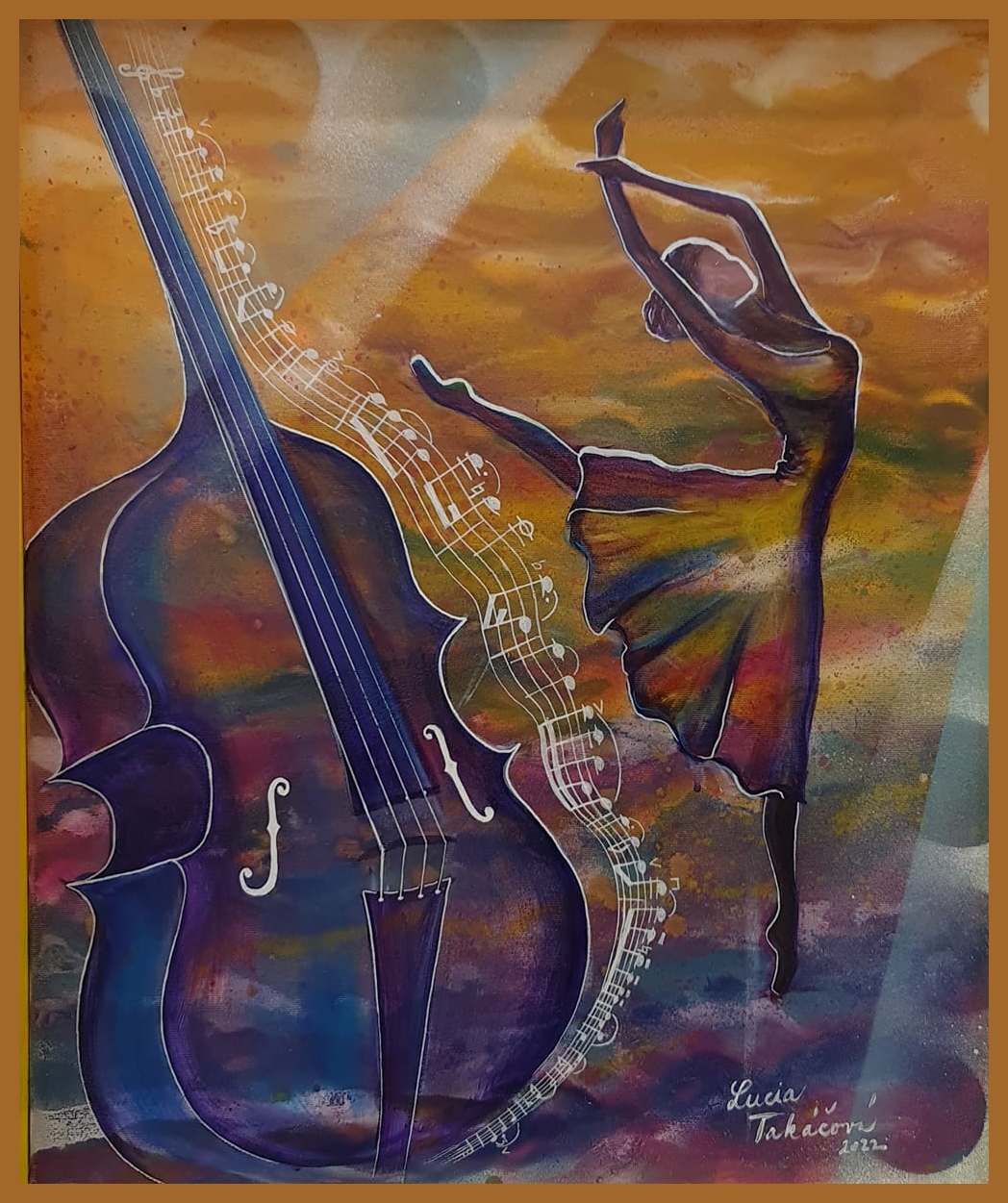
Dielo "Odette" je vizuálnou oslavou krásy baletu a prepojenia medzi hudbou a tancom. Lucia Takáčová vo svojom diele využíva jedinečnú kombináciu farieb, textúr a symbolov, aby vytvorila harmonickú, no zároveň dynamickú scénu. Postava baletky Odette je centrom tohto umeleckého rozprávania, pričom Takáčová dokáže brilantne zladiť jej jemnosť s hmotnosťou hudobného nástroja – huslí, ktoré pridávajú obrazu hĺbku a emocionálnu rezonanciu.
Kompozícia a symbolika
Obraz je kompozične založený na dialógu medzi jemnosťou baletky a robustnosťou huslí, ktoré dominujú v popredí v ľavej časti diela. Postava baletky, vznášajúca sa na špičkách, zosobňuje eleganciu a éterickosť, zatiaľ čo husle svojou hmotou evokujú stabilitu a rytmus, ktorý vedie tanec. Táto interakcia medzi nástrojom a baletkou je metaforou pre vzťah medzi hudbou a tancom, kde hudba udáva rytmus a tanec je fyzickým vyjadrením tejto melodickej štruktúry.
Kvety, ktoré obklopujú baletkuv pozadí aj husle v popredí, slúžia ako dôležitý vizuálny most medzi týmito dvoma prvkami. Ich rôznorodosť a farby dodávajú obrazu pocit vitality a obnovy. Kvety v diele nie sú len dekoratívnym prvkom; symbolizujú krehkosť ľudských emócií a prechodnosť krásy, čo sa opäť vzťahuje k baletnej postave Odette, ktorá zápasí medzi svojou ľudskou a nadprirodzenou podstatou.
Farebná paleta a jej význam
Farebná paleta, ktorú autorka používa, je neobyčajne bohatá a kontrastná. Pozadie obrazu je oživené teplými tónmi oranžovej, žltej a červenej, ktoré navodzujú pocit vášne a emocionálneho napätia. Tieto farby odkazujú na dramatický podtón príbehu baletu, v ktorom je Odette zmietaná medzi láskou a tragédiou. V kontraste k tomuto pozadiu sú chladné modré a fialové tóny, ktoré dominujú na postave baletky a hudobnom nástroji. Tento farebný kontrast vytvára emocionálne napätie, čím diváka vtiahne do sveta, kde sa stretávajú sila a krehkosť, vášeň a pokoj.
Farebná kombinácia navyše zvýrazňuje symboliku huslí a baletky – robustná hnedá a čierna farba huslí odkazuje na ich statickú a stabilnú povahu, zatiaľ čo jemné modré a biele tóny baletky vytvárajú dojem vzdušnosti a plynulosti, akoby bola tanečnica len chvíľkovým obrazom, prchavou formou krásy.
Technika a textúra
Lucia Takáčová v tomto diele ukazuje svoje majstrovstvo kombinovanej techniky, kde experimentuje s vrstvením farieb a textúr. Textúra huslí je vypracovaná detailne, čím vyjadruje pevnosť a hmotnosť nástroja. Naproti tomu textúra šiat baletky je jemná, s dôrazom na prechody medzi jednotlivými tónmi farieb, čo vytvára efekt pohybu a živosti. Baletka nie je len figurálnym zobrazením, ale jej telo, tvar a pohyb sú prenesené do vizuálnej formy s využitím plynulých línií a jemných detailov, ktoré zvýrazňujú jej ladnosť.
Symbolický a psychologický rozmer
Dielo v sebe nesie silný symbolický podtext. Baletka Odette predstavuje nielen hlavnú postavu z Labutieho jazera, ale aj symbol vnútorného zápasu medzi vnútornou a vonkajšou krásou, medzi krehkosťou a silou. Jej pohyb naznačuje, že hudba nie je len akustickým zážitkom, ale sa pretavuje do fyzického prejavu a emócií. Jej postava je symbolom premeny – tanečná póza evokuje nielen fyzický výkon, ale aj vnútorný pokoj a sebadisciplínu.
Psychologicky sa dielo dotýka tém balansovania medzi vnútorným svetom emócií a vonkajším prejavom elegancie a krásy. Hudba reprezentovaná husľami sa stáva sprievodcom pre pohyb tanečnice, ktorá sa snaží dosiahnuť harmóniu a pokoj, napriek dramatickým okolnostiam príbehu.
Porovnanie s tvorbou svetového autora
Technika a kompozícia diela "Odette" možno prirovnať k dielam svetovo známeho maliara Francisa Picabiu, ktorý experimentoval s kombinovaním figurálnych a mechanických prvkov vo svojich dielach. Picabia bol nekonvenčný vo svojom prístupe k zobrazeniu pohybu a dynamiky, podobne ako Lucia Takáčová, ktorá prepojením baletky a hudobného nástroja vytvára dialóg medzi mechanikou hudby a eleganciou tanca. Rovnako ako Picabia vo svojich surrealistických a dadaistických dielach, aj Lucia Takáčová kladie dôraz na prepojenie medzi hmotným a nehmotným, medzi technikou a emóciou.
Obaja umelci prekonávajú hranice tradičného zobrazovania – Picabia vo svojom čase skúmal, ako možno mechanické formy spájať s organickými telami, zatiaľ čo Lucia Takáčová využíva husle a baletku ako prostriedky na vyjadrenie komplexnej interakcie medzi hudbou a pohybom, čím sa dielo stáva viacdimenzionálnym, dynamickým a plným energie.
Záver
Dielo "Odette" je prepracovanou vizuálnou interpretáciou baletného príbehu, ktorý Lucia Takáčová uchopila prostredníctvom jedinečného prepojenia medzi hudbou, tancom a symbolickými prvkami prírody. Bohatá farebná paleta, textúrne detaily a kontrastné prvky prinášajú silný emocionálny náboj, ktorý diváka vtiahne do sveta pohybu, krásy a prechodu medzi rôznymi formami umenia. Prirodzené prepojenie figurálnej a mechanickej estetiky robí z tohto diela významný príspevok do modernej výtvarnej tvorby, pričom jeho štýl a technika nachádzajú paralely v dielach nekonvenčných umelcov, ako je Francis Picabia.
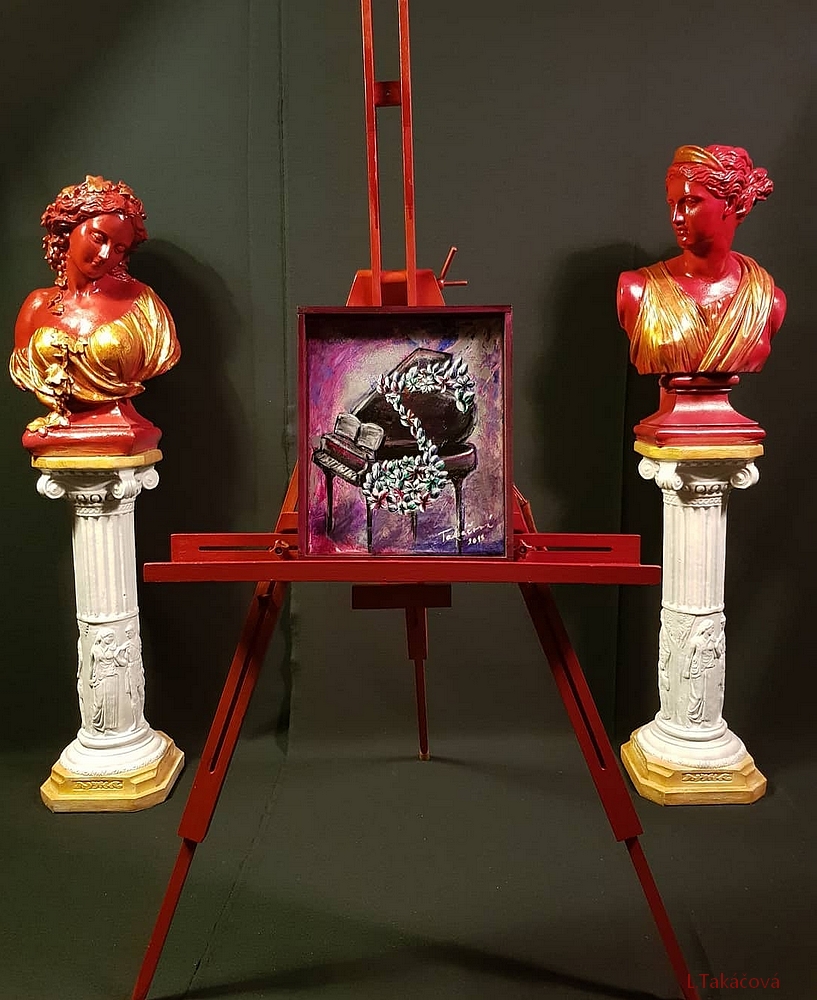
Autorka: Lucia Takáčová
Názov diela: Melódia kľudu a lásky
Rozmer: 30x35 cm
Technika: kombinovaná
Odborný rozbor diela "Melódia kľudu a lásky" od Lucie Takáčovej
Dielo "Melódia kľudu a lásky" od Lucie Takáčovej je jemnou a intímnou kompozíciou, ktorá stelesňuje pokoj a harmóniu. Lucia Takáčová v tomto diele pracuje s výraznými symbolmi – centrálnym objektom je klavír, ktorý je obklopený vencami kvetov. Symbolika hudby a kvetov je tu zreteľne prepojená s témou lásky a pokoja, ktorú klavír a jemné detaily kvetov evokujú.
Kompozícia a symbolika
Klavír, ktorý zaberá stredovú časť obrazu, je viac než len hudobným nástrojom. V kontexte tohto diela predstavuje vnútorný pokoj a hlboké emócie. Klavír, ako zdroj melódie, symbolizuje harmóniu medzi svetom vnútorným a vonkajším, čo autorka podporuje jeho umiestnením v strede kompozície.
Kvetinový veniec, ktorý obklopuje klavír, je symbolom lásky, jemnosti a oddanosti. Kvety v tomto diele predstavujú prirodzenú krásu a sú metaforou pre krehkosť citov a zároveň ich večnosť. V spojení s klavírom symbolizujú pokoj a harmóniu, ktorú láska a hudba prinášajú.
Farebná paleta a jej význam
Farebná paleta je charakteristická svojimi tlmenými, harmonickými tónmi. Fialová farba, ktorá dominuje pozadiu, evokuje mystiku, pokoj a duchovný rozmer. Tento odtieň vytvára atmosféru meditácie a vnútorného sústredenia. Klavír samotný je zobrazený v tmavých, elegantných tónoch, čo zvýrazňuje jeho centrálne postavenie v kompozícii.
Kvetinový veniec je farebne odlišný, pričom jemné odtiene bielej, zelenej a ružovej kontrastujú s tmavším pozadím. Tento kontrast symbolizuje jemnosť a krehkosť lásky, ktorá vyniká na pozadí pokojnej a hlbokej melódie života. Kvety, obklopujúce klavír, pôsobia ako vizuálny ekvivalent hudobnej melódie, ktorá preniká celým priestorom obrazu.
Technika a textúra
Takáčová v tomto diele využíva kombinovanú techniku, ktorá umožňuje dosiahnuť bohatú textúru a hlbokú farebnú vrstvu. Textúra je jemná a hladká, čím podporuje celkový dojem pokoja a vyváženosti. Jemné prechody farieb na pozadí vytvárajú ilúziu priestoru, ktorý obklopuje klavír a kvety, pričom tento priestor pôsobí takmer étericky.
Klavír a kvetinový veniec sú zobrazené s dôrazom na detaily, čo dodáva obrazu trojrozmerný efekt. Kvety majú jemnú textúru, ktorá kontrastuje s hladkosťou klavíra, čím autorka dosahuje vizuálny zážitok, ktorý pripomína hmatateľnú povahu týchto prvkov.
Symbolický a psychologický rozmer
Dielo "Melódia kľudu a lásky" predstavuje vnútorný svet pokoja, rovnováhy a lásky. Klavír, ako symbol hudby a harmónie, je nástrojom, ktorý prenáša tieto pocity na diváka. Kvety, ktoré obklopujú klavír, sú symbolom krehkosti a krásy lásky, ktorá však pretrváva vďaka svojej vnútornosti a hlbokému prepojeniu s hudbou.
Psychologicky dielo vyvoláva pocity pokoja a introspekcie. Hudba, ktorá je v tomto prípade implicitným prvkom, hrá kľúčovú úlohu v evokovaní týchto emócií. Divák sa ocitá v priestore, kde je možné cítiť harmóniu medzi umením a prírodou, medzi hudbou a kvetmi, čo vytvára jemný, no silný emocionálny zážitok.
Záver
Dielo "Melódia kľudu a lásky" je výnimočnou syntézou hudby, prírody a emócií. Lucia Takáčová v tomto diele brilantne zachytáva pokoj a lásku, pričom využíva jemnú farebnú paletu, prepracovanú textúru a symboliku, ktorá prenáša diváka do sveta harmónie. Téma lásky a hudby je vyjadrená cez spojenie klavíra a kvetinového venca, čo robí z tohto diela hlboký vizuálny aj emocionálny zážitok.

Autorka: Lucia Takáčová
Názov diela: Na krídlach hudby
Rozmer: 70x50 cm
Technika: kombinovaná
Odborný rozbor diela "Na krídlach hudby" od Lucie Takáčovej
Dielo "Na krídlach hudby" je fascinujúcou symfóniou farieb, textúr a symbolov, ktorá spája hudbu a prírodu do harmonického celku. Autorka tu zobrazuje husle, obklopené kvetmi a prítomnosťou holubice, ktorá prináša duchovný rozmer do kompozície. Tento obraz je ukážkou prepojenia umeleckého a prírodného sveta, kde každý prvok nesie hlboký symbolický význam a vzájomne sa dopĺňa v rámci celkovej kompozície.
Kompozícia a symbolika
Husle, ktoré dominujú kompozícii, symbolizujú hudbu ako formu umenia, ktorá dokáže vyjadriť hlboké emócie a rezonovať s ľudskou dušou. Husle sú tradične spojené s eleganciou a vážnosťou, čo ich umiestnenie v strede obrazu podčiarkuje ako stredobod diania. Kvety, ktoré ich obklopujú, symbolizujú prirodzenú krásu a krehkosť emócií, ktoré hudba prináša. Kvetinová dekorácia oživuje scénu a vytvára pocit, že hudba je živý a dynamický fenomén, ktorý sa prelína s prírodou.
Holubica v pravom dolnom rohu obrazu nesie silnú symboliku mieru, lásky a duchovnej čistoty. Jej prítomnosť vedľa huslí poukazuje na transcendentálny charakter hudby – ako médium, ktoré môže priniesť pokoj a harmóniu do chaotického sveta. Holubica je tiež symbolom slobody a nádeje, čo dáva dielu optimistický a pokojný náboj.
Farebná paleta a jej význam
Farebná paleta je zvolená tak, aby vytvorila kontrast medzi pokojom a intenzitou. Tmavšie pozadie, kombinujúce fialové a čierne tóny, poskytuje dramatické pozadie pre svetlé, pastelové farby kvetov a biele telo holubice. Svetlé farby dodávajú kvetom a holubici život a vitalitu, zatiaľ čo tmavšie tóny pozadia vytvárajú atmosféru tajomna a hĺbky. Tento kontrast symbolizuje spojenie svetla a tmy, harmónie a napätia, ktoré sú neoddeliteľnou súčasťou hudobného zážitku.
Husle sú zobrazené v teplých hnedých tónoch, čo odkazuje na ich organickú povahu a úlohu ako hudobného nástroja, ktorý dokáže vytvoriť bohaté emócie. Kontrast medzi týmito teplými tónmi a žiarivými farbami kvetov zdôrazňuje dynamiku medzi pevnou formou hudobného nástroja a krehkosťou kvetinovej dekorácie, ktorá ho obklopuje.
Technika a textúra
Lucia Takáčová využíva kombinovanú techniku na vytvorenie bohatej textúry a farebnej hĺbky. Kvety sú vykreslené s detailom, ktorý im dodáva trojrozmernosť a živý charakter, akoby vystupovali z obrazu do priestoru. Tento prístup k textúre vytvára pocit, že kvety sú v neustálom pohybe, že hudba, ktorú husle reprezentujú, oživuje a napĺňa celú kompozíciu.
Holubica je jemne a plynulo zobrazená, s dôrazom na jej symboliku mieru a harmónie. Jej jemná textúra a jemné línie vytvárajú dojem ľahkosti a vzdušnosti, čím kontrastuje s robustnejším zobrazením huslí. Celková textúra obrazu je vyvážená, kde detaily kvetov a jemnosť holubice vytvárajú dynamiku, zatiaľ čo husle prinášajú stabilitu a rovnováhu.
Symbolický a psychologický rozmer
Dielo "Na krídlach hudby" má hlboký symbolický a psychologický význam. Husle, ako stredobod obrazu, symbolizujú hudbu a jej schopnosť prenášať emócie a inšpirovať duchovný vzostup. Kvety, ktoré ich obklopujú, sú prejavom krehkej krásy a vitality hudby, ktorá ako živá entita ožíva v priestore. Holubica prináša do kompozície duchovný rozmer – je symbolom mieru, pokoja a harmónie, ktoré hudba dokáže priniesť.
Psychologicky dielo vyjadruje vnútorný pokoj, ktorý hudba sprostredkúva. Divák je vedený k tomu, aby sa sústredil na tichú harmóniu medzi prírodou a hudbou, kde každý prvok obrazu pôsobí ako most medzi hmatateľným a duchovným svetom. Táto harmónia medzi prírodnými prvkami a hudobným nástrojom symbolizuje rovnováhu a meditáciu, ktorú hudba prináša do ľudského života.
Porovnanie s americkým umelcom
Technika Lucie Takáčovej v diele "Na krídlach hudby" môže byť prirovnaná k práci amerického umelca Arthur Dove, ktorý bol priekopníkom americkej abstrakcie a známy pre svoje použitie hudobnej symboliky a prepojenie medzi prírodnými formami a abstraktnými výrazmi. Rovnako ako Dove, aj Lucia Takáčová využíva hudbu ako stredobod svojho umeleckého vyjadrenia, kde sa príroda a hudba prelínajú do harmonického celku.
Dove vo svojich dielach často spájal hudobné rytmy s prírodnými formami, pričom sa sústredil na vytvorenie pocitu harmónie a rytmu medzi týmito prvkami. Takáčová v tomto diele podobným spôsobom zobrazuje hudobný nástroj, ktorý interaguje s prírodnými prvkami, čím vytvára dynamickú a zároveň pokojne pôsobiacu kompozíciu.
Záver
Dielo "Na krídlach hudby" je vizuálnou ódou na hudbu, prírodu a duchovnú rovnováhu. Lucia Takáčová brilantne kombinuje symboliku huslí, kvetov a holubice, čím vytvára dielo plné harmónie, kde každý prvok nesie hlboký emocionálny a duchovný význam. V porovnaní s prácou Arthura Dovea, Takáčová rovnako ako on využíva hudbu ako prostriedok na zobrazenie harmónie medzi ľudským svetom a prírodou, pričom vytvára dielo, ktoré je vizuálne aj emocionálne bohaté a hlboké.
Autor článku: ARTTEO magazín Copyright © 2024 / Všetky práva vyhradené